A Love Story Without a Happy Ending (But Not Without Hope)
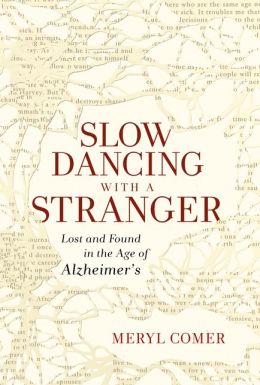
“Its a a love stsory without a happy ending, because the ending for Alzheimer’s patients can seem more like endless twilight. And it’s a call to arms for caregivers such as Comer….
When Alzhemier’s took hold, [her husband, chief of hematology and oncology at NIH, Harvey Gralnick] was a fit 56-year-old — he ran six miles a day — who dressed impeccably wearing the latest fashions beneath his lab coat…. For a time, he was able to mask his symptoms behind his reputation as a brilliant if eccentric scientist….
As his condition worsened, Comer, too, gave up her career — and she adds with a note of bitterness, her ‘prime.’ In her blunt-talking manner, she acknowledged that she did so not entirely out of devotion but because doctors told her more than once, wrongly, that the progress of her husband’s disease would not be long.
Finances, too, were a factor. It was almost impossible to find care that she felt would be satisfactory for her husband and yet affordable. Her burden intensified even further when her mother, too, developed Alzheimer’s; her mother now shares the same home with Comer and her husband.”
The book is meant to make people mad — and more realistic and focused — about the need for solutions. The article quotes George Vradenburg, a co-founder with Comer of the nonprofit group USAgainstAlzheimer’s, who hopes that Comer’s book will stir conversations about a disease many prefer not to think about. “I hope America gets mad,” Vradenburg is quoted as saying.
For more, see “Alzheimer’s — Thief and Killer,” in the Washington Post.