Advocacy, Aging and the NaCCRA Example
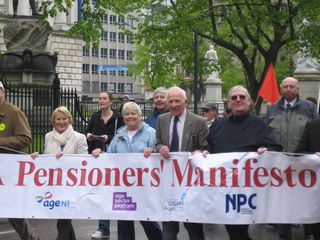
They knew that their best chances for success were to band together to tackle problems. They knew that they could not depend on a few to keep the work going, and they consciously brought “younger” seniors into leadership positions to keep the advocacy teams well staffed and to provide continuity of effort. Plus, they were not shy about presenting a unified national platform of concerns and recommended solutions — as suggested by that year’s “Pensioners’ Manifesto,” promoted at parades and public gatherings. The advocacy plan was supported by AgeNI, Age Sector Platform, Changing Ageing Partnership and other “separate” organizations.
In the US, seniors’ concerns often cross jurisdictional boundaries, including state boundaries. The distances are farther apart in the U.S. than in Northern Ireland, but again there can be power in organizing. As part of my research, I’ve been watching several groups across the country using the power of the internet to share information and “gather ” in order to advocate for solutions to common problems. A key to success seems to be advocating from a position of strength in numbers and shared concerns.
One of the U.S. organizations I’ve watched closely has been the National Continuing Care Residents Association or NaCCRA, a national body that grew out of early advocacy on behalf of residents in life care and continuing care residences in Florida. Residents came to recognize that as much as they appreciate and even love their individual communities, there are often common concerns about matters such as provider accountability for entrance fees and service fees paid by residents, understanding Fair Housing and ADA rules for residents with disabilities, residents’ rights during changes of “ownership,” resident rights during provider insolvency, reorganizations or bankruptcy, transparency of management decision-making and more. 
NaCCRA has both individual members and state chapters, and recently, resident-members in the State of Washington recognized that stronger funding of the national organization through the state chapters is needed to support effective advocacy at every level. By comparison, the senior housing providers certainly share information (and money) on a national basis — see e.,g., LeadingAge and American Seniors Housing Association — especially when addressing their advocacy positions with regulators and government leaders.
It will be interesting to see whether residents in CCRCs and Life Care communities in other states join Washington residents in supporting a strong national team through NaCCRA.