Demography of Aging Plus 9 Additional Prime “Elder Law” Concerns
University of Missouri Law Professor David English, who is the current Chair of the ABA Commission on Law and Aging, provides a succinct outline of key legal challenges connected to aging in the U.S., an outline he also uses to organize his law school’s Elder Law course. The essay appears in the May/June issue of Bifocal, capturing a lecture Professor English gave to the Institute of Gerontology at the University of Tokyo, Japan and the Beiing Administrative College in China.
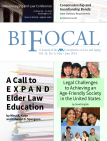
In addition to the impact of demography, Professor English points to the following “challenges:”
- Employer Pensions: “In many countries, pensions provided by employers are closely coordinated with government Social Security payments. In the US, the two systems are independent….”
- Social Security: “It is predicted that the [Social Security] Trust Fund will run out of money in 2033. The program will thereupon have to cut benefits by about 25% in order to match payments to current Social Security taxes. To avoid such a sudden cut, Congress should act well in advance of the 2033 deadline to either increase Social Security taxes or modify benefits. Each year that the US Congress waits to act, the necessary adjustments will become more severe….”
- Health Care Finances: “…Medicare already has many gaps in coverage, requiring that elderly persons purchase private supplemental policies. Medicaid for the poor isn’t necessarily in better financial shape, and because of low fees paid by Medicaid, many doctors refuse to accept Medicaid patients. Nor are Medicaid benefits coordinated well with Medicare….”
- Consumer Fraud: “The elderly are frequent targets of fraud. Federal and state regulation is incomplete and inconsistent…. Examples include: mortgage fraud; fraudulent sales of private health insurance; theft by court-appointed guardians; theft by agents under powers of attorneys; funeral fraud; telemarketing, home repair, and sweepstakes fraud.”
- Guardianships: “Over the past 30 years, there have been major reforms in US guardianship laws. The court is encouraged to explore alternatives to guardianship before making an appointment. In making an appointment, the court is encouraged to give the guardian only such powers as are necessary, a goal which is achieved by appointing what is known as a limited guardian. But there is a big gap between the statute and the actual practice.”
- Planning for Incapacity: “Most people will lack adequate mental capacity to make their own decisions sometime during their lives. Yet, most adults fail to plan in advance. There is a need for better education on the options and encouragement for people to plan.”
- Health Care Decisions: “[S]igning a health care power of attorney or health care directive may not be effective to assure that health care decisions are made in accordance with the individual’s wishes…. POLST [Physician Orders of Life Sustaining Treatment] shows great promise of creating a pathway whereby a patient’s wishes will more likely be honored.”
- Elder Abuse: “Similar to guardianship, good data on the prevalence of elder abuse does not exist but the increases in the number of elderly suggest a corresponding increase in the incidence of abuse.”
Professor English was also one of the participants at the 2014 Elder Law and Policy Conference recently held at John Marshall Law School in Chicago, serving as a moderator, with JML’s Barry Kozak, for the panel on “social security, pensions, and economic rights of older persons.”