Penn State Dickinson Law Supports the Search For Equity in Aging
On February 16, 2024, my law school, Penn State Dickinson Law, hosted its monthly session on Race and Equal Protection of the Law (REPL) and this time our focus was on the search for equity in aging.
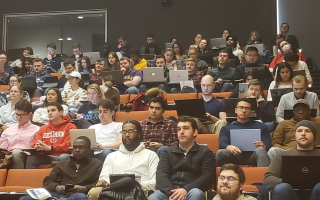
One of the first speakers was Sahar Takshi, whose work at Justice in Aging focuses on implementing the organization’s strategic initiatives on advancing equity. The initiative centers advocacy on issues that directly address systemic inequities faced by:
- Older adults of color,
- Older women,
- LGBTQ+ older adults,
- Older adults with disabilities, and
- Older adults who are immigrants or who have limited English proficiency.
Sahar offered definitions of core terms, including cultural competence and cultural humility, implicit bias, and a concept that I’m hearing more and more about, “vicarious trauma.” I had thought of this as an emerging concern for health and human services providers, who may be repeatedly exposed to clients’ and patients’ traumas, with the potential for unacknowledged negative impacts on their ability as “helpers” to cope, or to be able to provide consistent levels of service. Sahar reminded us that lawyers may be affected in this way, and perhaps may even be subject to greater self denial. (P.S. I learned our law school is offering a course on this topic in the Fall of 2024!).
Justice in Aging also has teamed with Community Legal Services of Philadelphia (CLS) on a funded out-reach initiative to older adults in the Philadelphia region. Part of the project focused on how the concept of racial justice needs to consider the importance of Medicaid as the largest public payer for long-term services and supports. One challenge is that receiving Medicaid may hit low income families in disproportionate ways, as the state’s “recovery program” may target their only asset — their home. Presenter Pam Walz, a supervising attorney at CLS in the Health and Independence unit, explained the needs for families of color to be able to access sound legal advice in order to avoid unfair Medicaid Estate Recovery impacts.
One of the rising stars at the REPL program was Olivia Robbins who is a paralegal in the Homeownership and Consumer Rights Unit at CLS in Philadelphia. Olivia provided a fascinating, detailed history of concerns about “tangled titles” and how there is a huge need for appropriate estate planning support to avoid this phenomenon. My 1L students were definitely asking for more information on this concern.
New Jersey Elder Law specialist Crystal Edwards, CELA, helped to introduce the day’s program for Penn State Dickinson Law, adding her words of support for stronger outreach to clients of color and the importance of attorneys of color for planning services. Crystal reminds us that “help” for older adults and their families comes from private attorneys too; indeed, Friday’s program was a holistic overview of public, private, local and national networks for equity in aging, highlighting the significance of race, gender, immigration status, and orientation when bias factors include “growing older.”
I provided an example from recent news stories about the intersection of “bias” impacting quality of care for older people who are also persons of color. The publication Nature recently published a comprehensive review of how “fingertip oxygen sensors,” that are a tool for catching “low” oxygen levels for people in nursing homes and which were especially during the height of the COVID pandemic, can fail to give accurate readings on dark skin. As the article reports, “Studies –some decades old — have established that the devices . . . can overestimate the amount of oxygen in the blood of people with dark skin which could lead health professionals to delay or decide against treatment.” Penn State Dickinson Law Professor Sarah Gerke commented on the troubling history in the Nature publication.
Visiting Professor Allison Lintal presented our students with important information to close the REPL session about restrictive housing laws or policies at a state or local level that fail to support co-housing, a potentially vital need for older people who can benefit from companionship and a team approach to financial support or care.
My deep appreciation to all of the speakers at our program, helping to introduce our first-year law students to the “search for equity in aging.”